Bananas are among the world’s most popular fruits. They’re affordable, easy to carry, naturally sweet, and rich in useful nutrients. However, many people wonder whether there’s an ideal time to enjoy them. The best time to eat banana depends on your daily routine, activity level, and health goals rather than a specific hour.
For example, a banana can complement breakfast, provide carbohydrates before exercise, or serve as a convenient afternoon snack. You can also enjoy one in the evening as part of a balanced meal.
Therefore, choosing the right timing means considering your nutritional needs and how your body responds.
This guide explains when to eat bananas for energy, exercise, digestion, and general wellness. It also covers their nutritional benefits, ripeness, and situations that may require extra care.
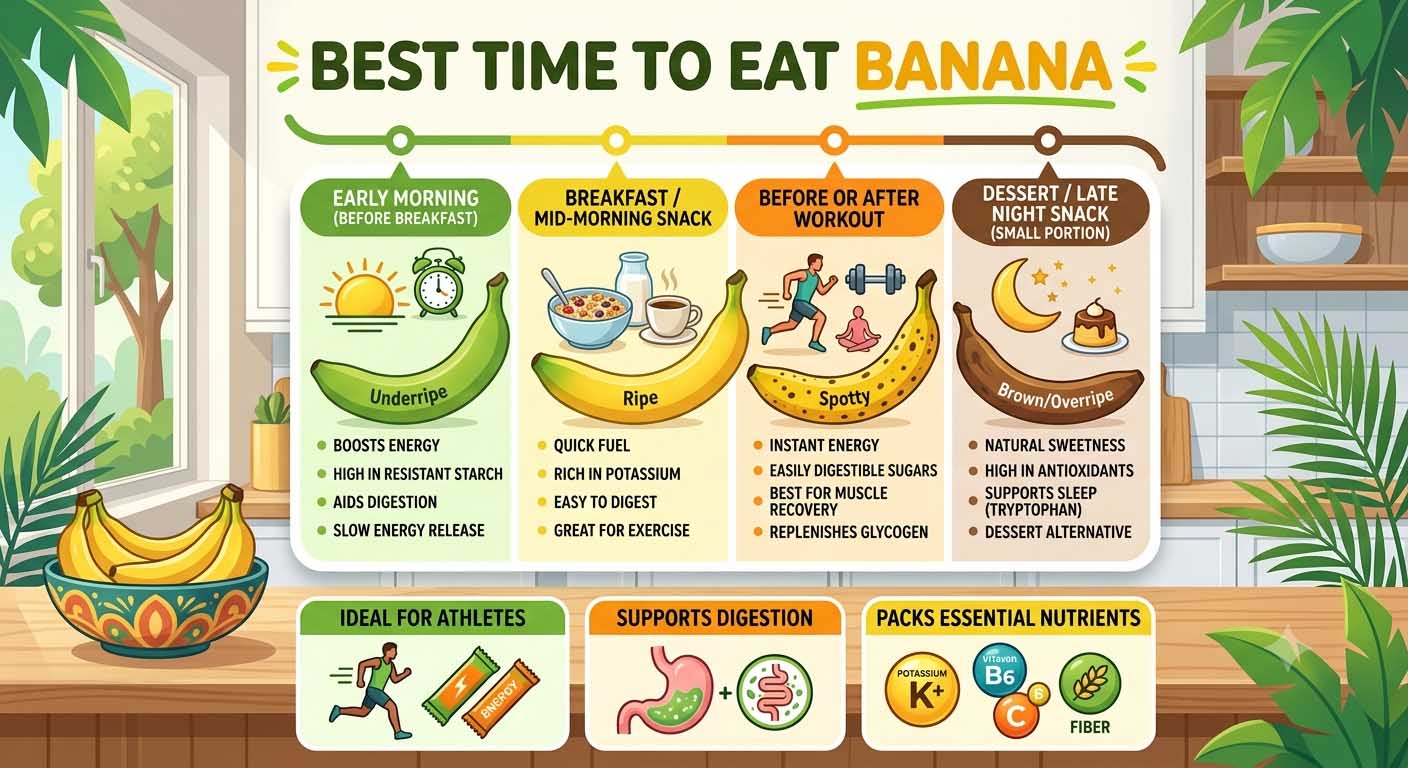
Best Time to Eat Banana: Quick Timing Guide
There isn’t one perfect time for everyone. Instead, the ideal timing depends on what you want from your snack.
| Time | Potential Benefit | Practical Tip |
|---|---|---|
| Morning | Adds carbohydrates and fiber to breakfast | Pair with yogurt or oatmeal |
| Before exercise | Provides convenient workout fuel | Try 30–60 minutes beforehand if tolerated |
| After exercise | Helps replace carbohydrates | Combine with a protein source |
| Afternoon | Offers a convenient snack | Add nuts for greater satisfaction |
| Evening | Can fit into a balanced snack | Consider portion size and digestion |
For most healthy adults, the overall quality of their diet matters more than the exact time they eat a banana.
However, people managing certain medical conditions may need to consider portions and individual dietary advice.
Best Time to Eat Banana in the Morning
Morning is a convenient time to enjoy bananas, especially when you’re preparing breakfast quickly.
A banana provides carbohydrates that your body can use for energy. It also adds fiber, potassium, and vitamins to your meal.
Benefits of Eating Bananas for Breakfast
Adding a banana to breakfast may help you:
- Include more fruit in your daily diet
- Obtain carbohydrates for morning activities
- Increase your dietary fiber intake
- Add natural sweetness without extra table sugar
- Prepare a quick, convenient meal
However, a banana alone may not keep everyone satisfied until lunch.
Therefore, combine it with foods that provide protein or healthy fats.
Healthy Breakfast Combinations
Try these simple options:
- Greek yogurt with sliced banana
- Oatmeal topped with banana and walnuts
- Whole-grain toast with peanut butter and banana
- Cottage cheese with banana slices
- A smoothie made with banana, milk, and oats
For example, oatmeal and banana provide carbohydrates and fiber, while Greek yogurt adds protein.
As a result, a balanced breakfast may provide greater satisfaction than eating fruit alone.
Best Time to Eat Banana Before a Workout
Bananas can be useful before physical activity because they contain carbohydrates that help fuel exercise.
For many people, eating a banana approximately 30–60 minutes before a workout is a practical starting point.
However, digestion varies. Some people prefer eating earlier, particularly before intense exercise.
Best Time to Eat a Banana for Workout Energy
A banana offers several practical advantages:
- Convenient carbohydrates
- Minimal preparation
- Easy portability
- Naturally occurring potassium
- A familiar food that many people tolerate well
For example, a banana can be a suitable snack before walking, cycling, running, or strength training.
Nevertheless, the ideal portion depends on workout duration, intensity, and your usual eating habits.
If you’re planning your exercise schedule, understanding the best time to workout can help you coordinate meals and physical activity.
Should You Eat a Banana Immediately Before Exercise?
You can, provided your stomach tolerates it.
However, eating immediately before vigorous activity may cause discomfort for some people.
Therefore, experiment with timing during ordinary training sessions rather than trying a new eating routine before an important event.
Best Time to Eat Banana After Exercise
A banana also makes a practical post-workout snack.
During exercise, your body uses stored carbohydrates for energy. Afterward, carbohydrate-containing foods help replenish those stores.
However, bananas contain relatively little protein.
Therefore, combining them with protein-rich foods can create a more complete recovery snack.
Best Time to Eat a Banana for Muscle Recovery
Eating carbohydrates after exercise can help replenish glycogen stores, especially when another demanding workout is approaching.
However, recovery also depends on adequate protein, hydration, rest, and overall nutrition.
Consider these combinations:
- Banana with Greek yogurt
- Banana and milk
- Banana protein smoothie
- Banana with cottage cheese
- Banana and peanut butter
For example, a smoothie made with milk, banana, and a suitable protein source provides both carbohydrates and protein.
If you use supplements, our guide to the best protein powder explains factors to consider when choosing a product for your fitness goals.
However, protein supplements aren’t necessary for everyone. Many people can meet their needs through ordinary foods.
Best Time to Eat Banana for Constipation
People experiencing constipation often wonder whether eating bananas at a particular time will improve digestion.
However, there isn’t strong evidence that morning or evening consumption makes a consistent difference.
Instead, banana ripeness, total fiber intake, fluid consumption, and individual tolerance matter more.
Best Time to Eat Ripe Bananas for Digestion
Ripe bananas contain dietary fiber that contributes to overall digestive health.
Therefore, they can form part of a balanced eating pattern that supports regular bowel movements.
However, bananas alone aren’t a reliable treatment for constipation.
For better results, include a variety of fiber-rich foods and drink enough fluids.
Green Bananas and Resistant Starch
Green bananas contain more resistant starch than fully ripe bananas.
Resistant starch escapes digestion in the small intestine and reaches the large intestine, where gut bacteria can ferment some of it.
However, individual responses vary. Some people tolerate less-ripe bananas well, while others experience bloating or digestive discomfort.
Therefore, choose the ripeness that suits your digestion rather than assuming one type works for everyone.
Best Way to Eat Bananas for Digestive Health
If you experience occasional constipation:
- Include fruits and vegetables regularly.
- Drink enough fluids throughout the day.
- Choose whole grains and legumes.
- Increase fiber gradually.
- Stay physically active when possible.
- Seek medical advice if symptoms persist.
In addition, exploring different foods high in fiber can help you build a more varied eating pattern.
Best Time to Eat Banana for Acid Reflux
Bananas are relatively low-acid fruits, and many people with acid reflux tolerate them comfortably.
However, individual food triggers vary. A banana that feels soothing to one person may cause discomfort for another.
When Should You Eat Bananas With Acid Reflux?
There isn’t one medically established best time.
Instead, consider how bananas fit into your usual meals and whether they trigger symptoms.
Helpful habits include:
- Eating moderate portions
- Avoiding very large meals
- Noticing personal food triggers
- Avoiding lying down soon after eating
- Choosing snacks that feel comfortable to digest
For example, if you experience reflux at night, eating a banana shortly before bed may not be ideal, even if the fruit itself isn’t a trigger.
Therefore, focus on your symptoms and overall meal timing.
If reflux occurs frequently, disrupts sleep, or causes swallowing difficulties, consult a healthcare professional.
Best Time to Eat Banana at Night
For most healthy people, eating a banana in the evening is perfectly reasonable.
There is no strong evidence that bananas become unhealthy simply because you eat them after sunset.
However, the portion and accompanying foods still matter.
Benefits of Eating a Banana in the Evening
A banana can provide:
- A convenient source of carbohydrates
- Dietary fiber
- Potassium
- Natural sweetness
- An alternative to some highly processed desserts
For a more satisfying snack, pair it with yogurt, nuts, milk, or peanut butter.
However, pairing a banana with protein or fat doesn’t guarantee that blood sugar will remain unchanged.
People monitoring glucose levels should consider the total carbohydrate content of their snack.
Can Eating Bananas Before Bed Affect Sleep?
Bananas contain nutrients involved in normal nerve and muscle function.
However, evidence doesn’t establish that eating a banana before bed directly improves sleep quality.
Therefore, enjoy bananas at night if they suit your appetite and digestion, but don’t treat them as a sleep remedy.
Best Time to Eat Banana on an Empty Stomach
Most healthy people can eat bananas on an empty stomach without problems.
However, because bananas primarily provide carbohydrates, eating one alone may leave some people hungry again relatively quickly.
For a more balanced meal, combine it with:
- Eggs
- Greek yogurt
- Oatmeal
- Nuts
- Nut butter
- Milk
For example, a banana with yogurt provides carbohydrates and protein.
As a result, the combination may help you stay satisfied longer than fruit alone.
Nevertheless, there’s no need to avoid bananas on an empty stomach if you tolerate them well.
Are Bananas Healthy? Nutritional Benefits Explained
Yes. Bananas provide carbohydrates, dietary fiber, and several essential vitamins and minerals. They’re naturally low in fat and contain no cholesterol.
According to nutritional information available through USDA FoodData Central, one medium banana weighing approximately 118 grams typically provides:
| Nutrient | Approximate Amount |
|---|---|
| Calories | 105 |
| Carbohydrates | 27 g |
| Dietary fiber | 3 g |
| Natural sugars | 14 g |
| Potassium | 422 mg |
| Vitamin B6 | 0.4 mg |
| Vitamin C | 10 mg |
| Magnesium | 32 mg |
Actual values vary with banana size and ripeness.
In addition, bananas require little preparation. Their natural peel makes them convenient for work, school, and travel.
Although they’re nutritious, bananas work best as part of a varied diet rather than as a replacement for other fruits and vegetables.
Health Benefits of Eating Bananas Regularly
Bananas offer several nutritional advantages when included in a balanced diet.
Potassium Supports Heart and Muscle Function
Potassium helps maintain normal nerve signaling, muscle contractions, and fluid balance.
It also contributes to healthy blood pressure regulation.
However, bananas are only one source of potassium. Beans, potatoes, vegetables, and dairy foods can also contribute meaningful amounts.
Dietary Fiber Supports Digestion
Bananas provide fiber that contributes to digestive health.
In addition, dietary fiber can help make meals more satisfying.
However, eating a variety of fiber sources is more beneficial than relying on one fruit.
Carbohydrates Provide Energy
Your body uses carbohydrates as an important energy source.
Therefore, bananas can be convenient before physical activity or during a busy day.
Potassium Helps Normal Muscle Contractions
Potassium plays a role in normal muscle function.
However, eating bananas doesn’t guarantee protection against exercise-related muscle cramps, which can have several causes.
For people developing a strength-training routine, understanding the benefits of deadlifts may also help them build a balanced fitness program.
Bananas Offer Convenient Nutrition
Bananas require no cooking, peeling tools, or refrigeration before eating.
As a result, they’re easy to include in packed lunches, travel bags, and quick snacks.
Best Time to Eat Banana Based on Ripeness
Banana ripeness affects flavor, texture, and carbohydrate composition.
As bananas ripen, some starch converts into sugars. Consequently, ripe bananas generally taste sweeter than green ones.
| Ripeness | Characteristics | Common Uses |
|---|---|---|
| Green | Firmer, less sweet, more resistant starch | Cooking and specific recipes |
| Yellow | Softening texture, mild sweetness | Everyday snacking |
| Yellow with brown spots | Sweeter and softer | Smoothies and oatmeal |
| Mostly brown | Very soft, strongly sweet | Baking and banana bread |
However, ripeness alone doesn’t determine whether a banana is healthy.
Therefore, choose according to your taste, digestive tolerance, and intended recipe.
Healthy Ways to Eat Bananas Throughout the Day
Bananas work well in many simple meals and snacks.
Try these ideas:
- Slice bananas over oatmeal.
- Add them to plain Greek yogurt.
- Blend them into smoothies.
- Spread peanut butter on banana slices.
- Serve bananas with whole-grain toast.
- Freeze ripe bananas for homemade frozen desserts.
- Add mashed banana to pancakes.
- Use ripe bananas to sweeten certain baked goods.
For example, mashed banana can replace some added sugar in selected recipes, although the amount depends on the recipe.
In addition, combining bananas with other nutritious foods provides a wider range of vitamins, minerals, protein, and healthy fats.
Who Should Be Careful About Eating Bananas?
Most healthy people can enjoy bananas regularly.
However, certain health conditions require more individualized dietary choices.
People With Kidney Disease
Bananas contain potassium, which some people with kidney disease need to monitor.
However, potassium restrictions depend on kidney function, medications, laboratory results, and individual treatment plans.
Therefore, don’t automatically eliminate bananas if you have kidney disease.
Instead, follow advice from your healthcare professional or renal dietitian.
People Managing Blood Sugar
Bananas contain carbohydrates and natural sugars, so they can affect blood glucose levels.
However, people with diabetes may still include bananas in a balanced eating plan.
Useful considerations include:
- Portion size
- Banana ripeness
- Total carbohydrates in the meal
- Individual glucose response
- Other foods eaten alongside the banana
For example, combining a moderate banana portion with unsweetened yogurt may provide a more balanced snack than eating several bananas alone.
Nevertheless, individual responses differ.
People With Banana Allergies
Although uncommon, banana allergies can occur.
Some individuals with latex allergy may also react to bananas because of cross-reactive proteins.
Therefore, anyone who experiences allergic symptoms after eating bananas should seek appropriate medical guidance.
Common Myths About When to Eat Bananas
Several popular claims about bananas lack convincing scientific support.
Myth: Bananas Always Cause Weight Gain
Bananas don’t automatically cause weight gain.
Instead, long-term weight changes depend on overall energy intake, activity, and other factors.
A banana can fit into eating patterns designed for weight maintenance, loss, or gain.
Myth: Eating Bananas at Night Is Unhealthy
The time of day doesn’t make bananas inherently unhealthy.
However, people with nighttime reflux or specific blood sugar management needs may benefit from adjusting snack timing.
Myth: Bananas Should Only Be Eaten Before Exercise
Bananas can be useful before workouts, but they’re also suitable for breakfast, afternoon snacks, and post-exercise meals.
Therefore, there’s no reason to reserve them exclusively for physical activity.
Myth: Everyone Should Eat Bananas on an Empty Stomach
There is no universal health benefit to eating bananas before other foods.
Some people enjoy them alone, while others prefer combining them with protein or fat.
Both approaches can fit into a healthy diet.
Best Time to Eat Banana for Everyday Nutrition
Simple habits can help you enjoy bananas without overcomplicating your diet.
Consider these suggestions:
- Add sliced banana to a balanced breakfast.
- Pack one for a convenient afternoon snack.
- Pair bananas with protein-rich foods when you want a more satisfying meal.
- Choose ripeness according to taste and digestion.
- Freeze ripe bananas before they spoil.
- Include other fruits and vegetables for nutritional variety.
- Adjust portions according to your individual dietary needs.
Although bananas provide several nutrients, they don’t contain everything your body needs.
For example, people exploring bone-health nutrition may also find our guide to the benefits of d3 and k2 useful when learning about the roles of different vitamins.
However, supplements should never replace a varied diet without a specific medical reason.
Frequently Asked Questions About Banana Timing
What Is the Best Time to Eat a Banana?
The ideal time depends on your routine and nutritional goals.
For example, breakfast, pre-workout snacks, and afternoon breaks are all convenient options.
Is It Healthy to Eat a Banana Every Day?
For most healthy adults, eating a banana daily can fit into a balanced diet.
However, variety remains important because different fruits provide different nutrients.
Should I Eat a Banana Before or After Exercise?
Both options can work.
Before exercise, bananas provide carbohydrates for energy. After exercise, they help replace carbohydrates, particularly when paired with protein.
Can Bananas Help With Constipation?
Bananas provide dietary fiber, which supports digestive health.
However, their effect on constipation varies, and adequate fluids and overall fiber intake matter more than banana timing alone.
Are Bananas Good for Acid Reflux?
Many people tolerate bananas well because they’re relatively low in acid.
However, personal triggers vary, so monitor your symptoms and avoid eating too close to bedtime if that worsens reflux.
Can I Eat a Banana Before Bed?
Yes. Most healthy people can eat bananas before bed if they feel comfortable afterward.
However, people with nighttime reflux may prefer an earlier snack.
How Many Bananas Can You Eat Per Day?
There is no single number that suits everyone.
The appropriate amount depends on your total diet, energy needs, medical conditions, and other fruit choices.
Therefore, focus on dietary variety rather than a fixed daily banana target.
Final Thoughts: Choosing the Best Time to Eat Banana
The best time to eat banana depends on your lifestyle, exercise habits, digestive comfort, and overall nutrition goals.
Morning consumption can complement a balanced breakfast. Meanwhile, eating a banana before exercise provides convenient carbohydrates, and enjoying one afterward can support recovery when paired with protein.
For digestive concerns, ripeness, fluid intake, and the rest of your diet matter more than the clock. Similarly, people with acid reflux should pay attention to personal triggers and meal timing.
Rather than following rigid rules, choose the time that fits your routine and enjoy bananas alongside other nutritious foods.
A balanced approach offers more practical benefits than searching for one perfect hour to eat this versatile fruit.